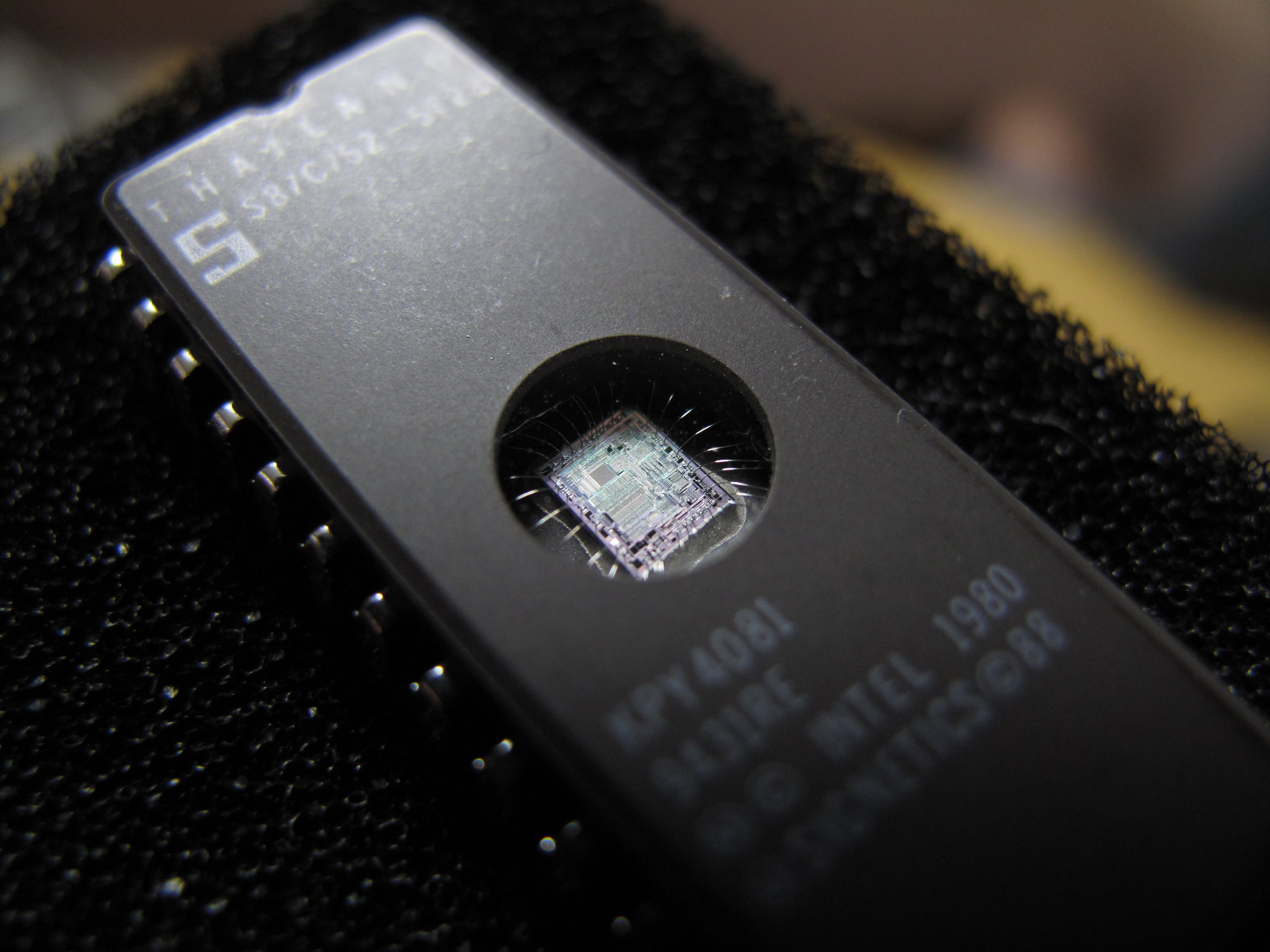
I was working on a Roland KR-370 that had been through a lightning strike, and I was looking for the BIN file to program onto a replacement EPROM (IC2). I did eventually find one, posted by a very helpful individual in the Badcaps forum.
During my search, I encountered several enormous repositories of EPROM dumps (such as this one at dbwbp.com, which is worth checking out), and decided to reproduce them on my website, should anybody need one. They’re listed below, or you can download them from my file share.
This page offers a curated library of free EPROM dumps and OS ROMs for Yamaha, Roland, Korg, Casio, Kurzweil, and more. Whether you’re restoring a damaged keyboard, upgrading firmware, or preserving classic synth technology, these downloadable files can help you bring your gear back to life. Ideal for repair technicians, collectors, and DIY enthusiasts.
I recently have had a couple of people reach out about updating firmware on the Roland R-880. I have a separate article about the R-880 in particular.
Reading and Writing ROMs
Although if you’ve found this directory, you likely know how to use it! However, I struggled to find a programmer that didn’t look like a cheap knockoff—at least that didn’t cost a fortune. I ended up choosing the XGecu T48, which costs about $80. As best as I can tell, this is the name brand device the other mildly cheaper options are based on.

Disclaimer
All trademarks and copyrights remain the property of their respective owners. If you believe material on this page infringes your copyright, please send a DMCA notice to our Designated Agent using the contact information below and including the elements required by 17 U.S.C. § 512(c)(3).
Upon receipt of a valid notice, we will act expeditiously to remove or disable access to the identified material and notify the affected user. If you believe material was removed or disabled as a result of mistake or misidentification, you may submit a counter-notification meeting the requirements of 17 U.S.C. § 512(g)(3).
Alexander Peppe • 4 Scammon St. Suite 19-406, Saco, ME 04072
Email: [email protected] • Phone: 207-400-6009
Full DMCA Policy
All firmware and ROM images are © of their original manufacturers. They are linked here solely for lawful purposes such as archival, repair, and maintenance of vintage equipment. This archive is provided free of charge for educational and preservation purposes. The maintainer derives no revenue from these files.
By downloading these files, you agree that you own the original hardware for which the firmware is intended, and that you will use the file only for lawful repair or backup purposes. Use these files at your own risk. The maintainer is not responsible for any damage caused by incorrect use or any legal issues arising from unauthorized use of firmware.
The EPROM Directory
Want to Contribute?
You can upload EPROM firmware to me using this public upload directory. Once I’ve reviewed it I’ll add it to the list. Please either label it clearly, or contact me at the same time.
Meu Roland E70 na reenicia o reset de Fabrica,
poderame ajudar, a recuperar a eprom ou similar?
Hello Americo! If the E-70 powers on but won’t complete a factory reset, it likely needs to be opened for diagnosis. The first thing I’d check is the internal backup battery / coin cell that saves memory (if it’s dead or leaking, it can cause odd behavior). In the E-70, this is a CR2032. If the keyboard does not power on at all, then I’d also check the internal fuses and power rails. While there are EPROM chips inside, those are usually not the first suspect. You might also try test mode—I’ll email you with instructions.
Olá Americo! Se o E-70 liga, mas não consegue concluir o reset de fábrica, provavelmente será necessário abri-lo para um diagnóstico. A primeira coisa que eu verificaria é a bateria interna de backup (bateria tipo moeda) que salva a memória — se ela estiver descarregada ou vazando, pode causar comportamentos estranhos. No E-70, essa bateria é uma CR2032.
Se o teclado não ligar de forma alguma, então também é importante verificar os fusíveis internos e as tensões da fonte de alimentação. Embora existam chips EPROM no interior, eles normalmente não são o primeiro suspeito. Você também pode tentar o modo de teste — vou lhe enviar um e-mail com as instruções.
Olá, estou procurando o firmware para o Roland TD-10 versão 1.00. Agradeceria muito se alguém pudesse me ajudar.
Olá Facundo! Pesquisei mais a fundo sobre isso. Ainda não consegui encontrar um download público confiável do firmware original do Roland TD-10 v1.00.
Se o módulo estiver travado em ‘BOOT LOADER Ver. 1.00’, verifique também se ele tem a placa de expansão TDW-1, porque um TD-10 expandido pode apresentar problemas de inicialização se essa placa não estiver instalada corretamente.
Você pode responder com a mensagem exata que aparece na inicialização e se ‘TD-10 + TDW-1’ aparece brevemente ao ligar, pois isso pode ajudar a identificar melhor o problema. Obrigado!
Hello Facundo! I looked into this further. I haven’t been able to find a trustworthy public download for the original Roland TD-10 v1.00 firmware.
If the module is stuck at ‘BOOT LOADER Ver. 1.00’, also check whether it has the TDW-1 expansion board, because an expanded TD-10 can have startup problems if that board is not installed correctly.
You can reply with the exact startup message and whether ‘TD-10 + TDW-1’ appears briefly at power-up, and that may narrow it down.
Thank you!
Hey Alexander! A few years back I shared some ROMs on yamahamusicians.com and they ended up on dbwp.com with totally wrong titles – “YAHAMA” and PCV-87A. Aahahaha! And apparently those errors made it to the archive you host too. Actually, the dump is from a Clavinova CVP-87A, not PCV!
Now, if you can help me, I’m looking for dumps, or the eprom or the entire board of the same CVP-87A but the main ROM on the EPROM D27C8000D, labeled XM454B0 or similar, to try fixing my CVP-87A that’s been sitting dead since 2020. I really want to fix this piano because it was my mom’s favorite and bring me really good memories of her. Anyway, the electric/electronic parts of the board are good. I rebuild the entire board, changed all capacitors and the MCU as well. And I tested everything for faulty lines, shorts, open components, bad diodes or resistors. I can “see” the MCU talking with the PSRAM and the EPROMs with the oscilloscpe. Actually, I am a very experienced electronic technician and I didn’t find any more reasons why the MCU won’t boot. I know, this old stuff is very hard to find, so sorry if I’m bothering you But if you can help, I’d really appreciate it! Thanks!
Hello Fausto,
That’s rather humorous regarding the typo and its travels! I’ll get that fixed.
Unfortunately I don’t have a dump of the XM454B0/D27C8000D main ROM or a spare board to offer. These boards often do have capacitor-related faults, but it sounds like you’ve already been through that side of it very thoroughly. If you don’t already have the service manual, let me know and I’ll send it over.
One thought is that, even with visible bus activity, it still could be a power supply, since these boards can appear partly alive without actually booting. I recently had a rather vexing case where this turned out to be the explanation…!
Thank you!
Hi, Alexander. First, really thanks for your answer! I manage to fix my board, after a real saga, I managed to find the culprit, and it was the PSRAM. Anyway. I’m writing because I’m curious about how many of those old CVP-87A you still work on, becaue I have a solution for boards that have bad VOICE ICs.
Thanks again.
That’s great news—the PSRAM is a good find after a long saga!
I do still run into CVP-87A units and other Yamaha boards from that era periodically. I’d be interested to hear any details you’re willing to share.
Thank you!
Hi Alex,
What a wonderful resource you are building here!. I fix electronics for a living, mostly amateur radio related. But I am an amateur musician who plays keyboards. So the logical thing was fixing synths and other musical instruments, at least for my own use 😉. I have worked on several instruments and now have a Yamaha P85 which refuses to power up. It lights the red LED but that is all. All power supplies are fine, SMD capacitors are new, CPU clock is running but it seems the firmware is corrupted (or maybe the RAM is bad?). It seems to enter an endless cycle that prevents anything else to happen. You need to remove the power cord to power it down. Any hints?. Is there a ROM dump available?. Thanks!
Hello Jose! Thank you for the kind words, and it sounds like we have quite a few overlapping interests!
I’ve had several Yamaha portables with this sort of symptom. A bad DM (main) board can certainly cause it. But I’ve also chased apparently bad main boards only to find trouble on the PN1 board. That’s the board carrying the standby/on switch and master-volume slider. The slider itself is more likely to cause audio trouble than a boot failure, and it usually presents just like this with a red power light and no sound. It’s a likely candidate, and I’ve replaced quite a few of these volume sliders. I’ve also more than once encountered bad solder joints on that board, particularly on the connector.
Before hunting for a ROM dump, I’d try the built-in diagnostics. Hold C#2, F2 and G#2 while powering on. Yamaha provides separate Master ROM, Slave ROM, RAM and flash tests. The service manual says an A3 tone sounds when test mode starts, but of course you won’t hear that if the volume control or audio path is the problem.
Thank you!
Hi there! I am a musician and a pianist, but not a reverse‑engineering type. I like to experiment with vintage Casio keyboards and just mess around with the sounds. One of my aunts owns a Casio CTK‑200, and I have been wondering for quite a while if this model—or some others like the CT‑700, SA, CA, or MA‑series keyboards—can be preserved and dumped as .bin ROMs and/or individual PCM instrument samples as .wav files. I also own two Suzuki Qchord QC1 units, and I can find absolutely no way to convert the built-in soundbank, GSSBK080.94B, or other related GM/GS banks such as GSSBK320.94B, into usable .sf2 soundfonts, although the Qchord is fully compatible with General MIDI and does support GS too. Also, my grandmother—my mother’s mother—had a Yamaha PSR‑19 keyboard, and I have definitely no clue if this model can also be dumped and preserved either. If you have any idea how to do this, I’d appreciate your response and see how you handle this process.
Hi Samuel,
Thanks for your comment! I haven’t personally tried extracting ROM data from the instruments you mentioned, so I can’t offer specific instructions. Reading a ROM with a programmer is one thing, but converting its contents into WAV samples or an SF2 soundfont is another, particularly if the format is proprietary.
If you already have any ROM dumps or soundbank files, like that GSSBK320.94B, I’d be happy to take a look and see what I can determine about their contents.
Thank you!
Hola, Excelente base de datos! Solo no encuentro Korg MS-2000/R Muchas gracias!
Hello Alejandro! Thank you very much for reaching out. I’m not aware of any BIN files available for download. The MS-2000/MS-2000R uses Korg’s official updater. The latest version is 1.07:
https://www.korg.com/us/support/download/software/1/154/3402/
¡Hola Alejandro! Muchas gracias por escribir. No conozco ningún archivo BIN disponible para descargar. El MS-2000/MS-2000R utiliza el actualizador oficial de Korg. La última versión es la 1.07:
https://www.korg.com/us/support/download/software/1/154/3402/
Thank you for the tip! only need the flash.bin 1MB rom, thank you anyway! Nice colection!
Looking for Kawai KSP-30 EPROM ROM Dump / Firmware File
Hello everyone,
I am currently restoring a vintage Kawai KSP-30 digital piano, and it seems the data on the original EPROM has become corrupted (or the chip needs replacement).
Does anyone happen to have a ROM dump file (.bin or .hex) for the Kawai KSP-30 firmware? If anyone has previously backed up the chip or has access to a working board and could share the dump, it would be greatly appreciated.
Thank you so much for your time and help!
How can i buy you a beer??
I just got a emulated Yamaha An1x working in a browser about 80% done because of your work. Thank you so much you are a legend.
Wow, that’s fantastic! I’m really glad my work has been helpful. I’d love to see what you’ve put together! Is there a demo or GitHub repository I could take a look at? Thank you!