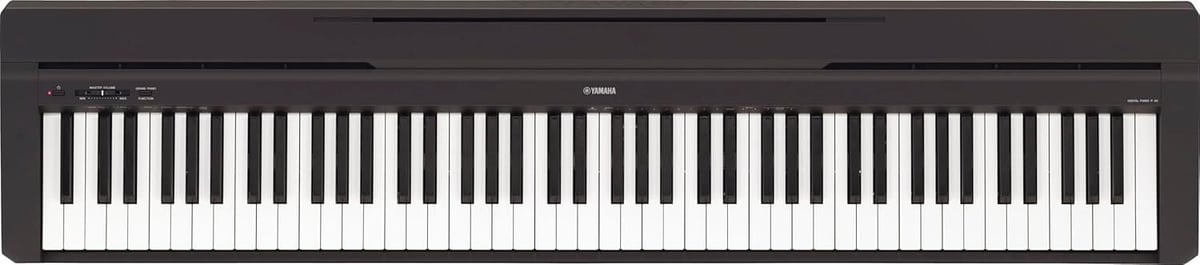
As a piano & keyboard technician and a Yamaha and Roland Authorized Service Center, I’m regularly asked what’s the best inexpensive keyboard to buy. I don’t care how good a digital piano looks in a listing photo—I care what happens after a year or two. Many inexpensive keyboards are designed to last only through the warranty period.
If you want an inexpensive digital piano that’s actually worth owning, Yamaha P‑45B and Roland FP‑10 are the clear winners. The Donner and Alesis can make sense only if you’re treating them as short‑term instruments.
Yamaha and Roland both supply parts for many years. In fact, I routinely repair instruments that are twenty or even thirty years old. Conversely, I regularly have customers bring in keyboards from other straight-to-Amazon manufacturers that are only a year old, and I already can’t find parts.
Some links in this article are affiliate links. As an Amazon Associate I earn from qualifying purchases. Your click fuels hours of reviewing old service manuals—at zero added cost to you.
The real decision: “Is it an instrument?” or “Is it disposable?”
At this price point, the biggest difference is not the number of sounds or the marketing language. The biggest difference is whether the company treats the keyboard like a serviceable instrument, or like a sealed consumer product.
In my shop, that translates into a simple question:
If something goes wrong, can I get parts and fix it properly—or is the “repair” basically “replace it”?
Yamaha and Roland have extensive service ecosystems. I can order parts for the Yamaha P‑45B and typically have them in hand quickly, usually within just a few days. The Roland FP‑10 is also built like a real instrument and is also serviceable through normal channels.
Donner is the opposite experience: It looks great in the listing, and it’s often priced aggressively, but in my experience it is not designed around repairability. Parts availability through technician channels is effectively nonexistent, and the construction isn’t “service-friendly.” That matters when the warranty ends.
Alesis Recital is a budget keyboard that can get someone started, but it’s not in the same class as Yamaha/Roland in feel or long-term ownership. It’s more of a “get the student through a season” instrument than a piano you grow into.
Quick comparison (these four Amazon models)
| Model | What it is | What I like | What I don’t | My take |
|---|---|---|---|---|
| Yamaha P‑45B | Entry-level “real” weighted digital piano | Reliable platform, simple, repairable, supported | Not a furniture cabinet out of the box; basic feature set | Winner for long-term ownership under $500-ish |
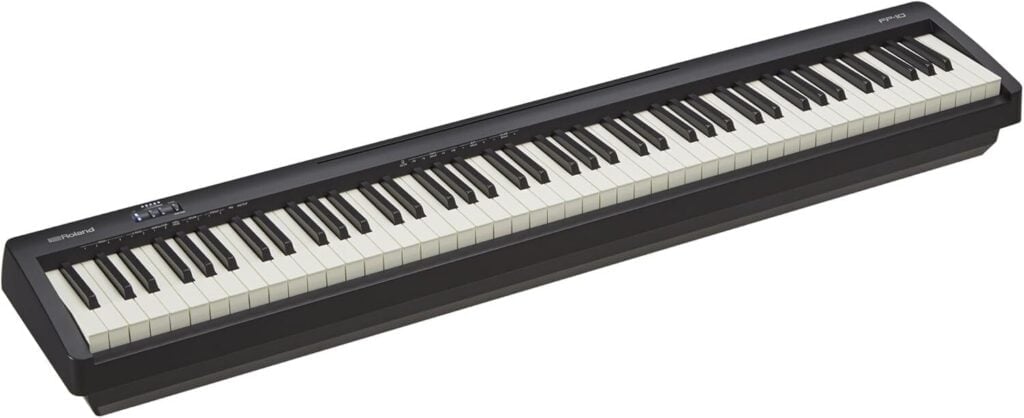
| Roland FP‑10 | Entry-level “real” weighted digital piano | Many players prefer the key feel; strong core design | Usually a little more money than P‑45B | Winner if touch is priority |
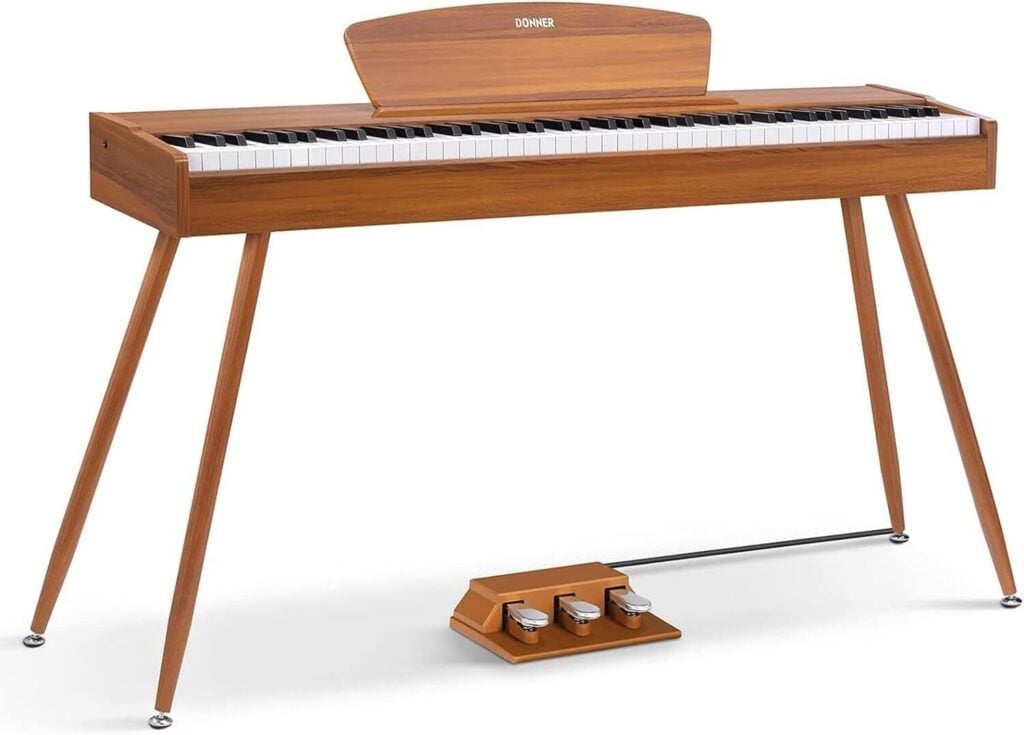
| Donner DDP‑80 | “Looks like furniture” Amazon piano | Very attractive; includes stand + triple pedals | Not built around repairability; parts/support ecosystem is weak | Only for short‑term use, in my opinion |
| Alesis Recital | Budget 88-key keyboard (semi-weighted) | Low cost, basic features, good “first notes” tool | Not hammer action; you’ll outgrow it quickly for piano technique | Okay as a temporary solution |
1) Yamaha P‑45B: The best “cheap” digital piano when you actually want to keep it
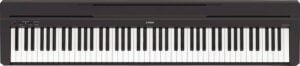
The Yamaha P‑45B is a straightforward, dependable digital piano with a real weighted action and a long support runway.
As a Yamaha Authorized Service Center, I see what happens to these after real use. When something fails (power jack issues, key contact issues, spills), Yamaha’s parts support is superb. I can order what I need to repair a P‑45B from Yamaha 24×7 and I’ll typically have the parts in days, not months.
Have just a few more dollars to spend? Consider the Yamaha P-145 instead of the P-45B. The Yamaha P-45B remains the most inexpensive new keyboard I would recommend, but the P-145 does add some nice features and is worth considering.
Make the P‑45B feel “furniture-like”: Add a proper stand
One reason people get tempted by the Donner DDP‑80 is the look. It comes with a built‑in furniture stand and triple pedals. However, you can absolutely get the P‑45B to feel far more “piano-like” in your home by simply adding a stable stand.
Best look & stability: a matching furniture-style stand (Yamaha’s L‑85 is made for P‑series)
Best budget option: a heavy-duty double‑braced X-stand or Z-stand (stable beats pretty)
Once the P‑45B is on a real stand with a bench, it stops feeling like “a keyboard on a table” and starts feeling like “a piano you live with.” And you still keep Yamaha’s support, parts, and repairability.
If you ever do have trouble (dead notes, odd volume behavior, power issues), start with my repair/troubleshooting guides:
Troubleshooting Your Digital Piano or Keyboard
How to Factory Reset Most Yamaha Keyboards and Digital Pianos
Why your sustain pedal works backwards (and what to buy)
The Yamaha P-71 is identical to the P-45, but is sold as an Amazon variant. You can see my notes after a recent repair of in Work Notes: P‑71 with no sound after a spill.
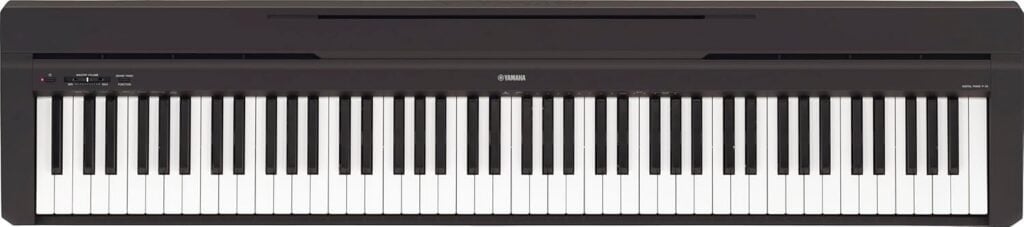
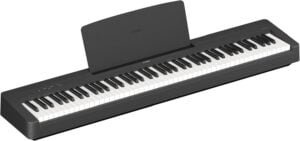
2) Roland FP‑10: the “also a real instrument” choice with better touch
Roland produces keyboard instruments with exceptional touch and feel. Roland uses their PHA‑4 Standard action in this model, and it’s very impressive for the price class. The FP‑10 is also a strong choice if you want Bluetooth MIDI to connect to apps without cable hassle.
Bottom line: if the FP‑10 is only a few dollars more than the P‑45B when you’re shopping, it’s absolutely worth considering. These two (Yamaha/Roland) are the only ones in this list I’d call real long-term buys in the inexpensive Amazon category.
And if you need a new power adapter for this FP-10 or any other Roland keyboard, check out my Roland power adapter lookup tool!
3) Donner DDP‑80: pretty, tempting, but not a long-term plan
The Donner DDP‑80 looks great in photos. In fact, out of the box, it’s similar in appearance to digital pianos costing thousands more—so what’s the problem?
When you buy a digital piano, you’re not buying a faux wood finish—you’re buying an electronics platform and a finely-tuned mechanical instrument. And it turns out you can put anything in a pretty box and call it a piano.
In my experience, Donner instruments are not designed with repair in mind. Parts availability to technicians is essentially nonexistent, and the construction doesn’t invite practical service work. In previous repairs, I’ve found some parts glued in place—clearly never intended to be serviced. When something fails outside the return window, the real-world outcome is often “replace it.”
If you only need something for a short stretch—temporary practice, a staged look for a room, a short-term project—fine. But if you’re buying an instrument you want to keep, the Donner is usually not where I’d put my money.
4) Alesis Recital: the “cheap 88 keys” choice (semi-weighted, not hammer action)
The Alesis Recital shows up constantly in “cheap keyboard” searches because it’s affordable, and it has 88 keys. But it’s important to understand what you’re actually buying: the Recital uses semi‑weighted keys, not a true hammer action. The touch is nowhere near as dynamic or realistic as the Yamaha or Roland options above.
That matters for piano technique. Semi‑weighted keys can be fine for basic note learning, but if your goal is to build real piano control, you’ll outgrow this quickly. Most people who start here end up upgrading to something like the Yamaha P‑45B or Roland FP‑10 anyway.
If you truly need the lowest cost path to “something playable,” the Alesis can be a temporary bridge. Just don’t confuse it with a weighted digital piano. Like the Donner above, it’s not intended to be serviced long-term.

My recommendation (pick one of these two)
If you’re making a decision between these four Amazon models, here’s how I’d call it:
Buy the Yamaha P‑45B if you want the safest inexpensive choice with excellent support, strong reliability, and real repairability.
Buy the Roland FP‑10 if you care most about key feel and want a comparable “real instrument” in the same price neighborhood (often a few dollars more).
Skip the Donner DDP‑80 unless you’re okay treating it as a short-term, “replace it if it fails” purchase.
Skip the Alesis Recital unless you simply need the cheapest 88 key option right now and accept that you’ll likely upgrade.
If you’re troubleshooting an instrument you already own (any brand), start with my repair FAQ here: Troubleshooting Your Digital Piano or Keyboard. And if you’re in my service area and want proper service from an authorized shop, you can reach me here: Contact / Schedule Service.